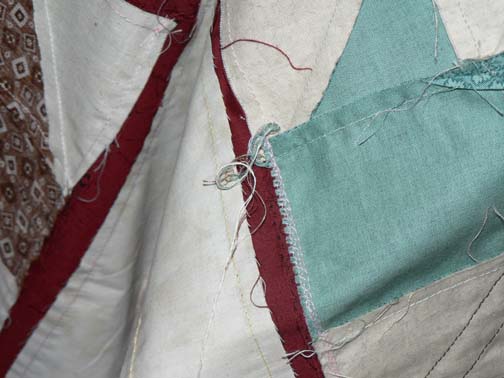
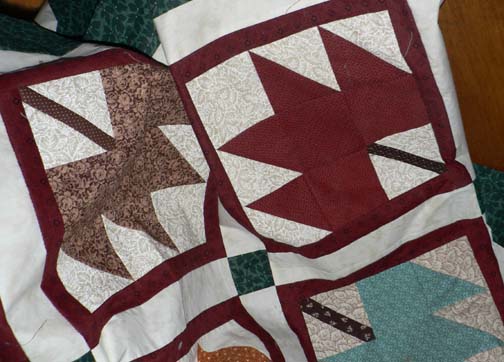
These are my stitches after the dermatologist removed the basal cell carcinoma. The stitches have been removed and the incision has healed nicely. I now have another thin white line, still tender to the touch. One friend saw this photo and said maybe the stitches are too tight and then said that I should alter it to look like a bug and blog about it (I tried making it look like a bug and it did not come out very good). Another wondered, “How many people would experience that picture as an act of genuine (and appropriate) intimacy?” Can you figure out which friend is a nurse and which friend is a therapist? People see things first from whatever perspective is most familiar to them.
There is a question I have been asking myself lately. I suppose the question stems from a perspective that is familiar to me for several reasons. First of all, because of my ongoing dealings with my son's struggles. But also because of other people I know. One lives with a disease that will not be healed, a disease that must be reckoned with on a daily basis. One has a daughter who struggles with unrelenting depression. Another lives with the memory of an unfaithful spouse.
So many people still live with suffering as a result of Katrina. Their lives have been turned upside down, and for many of them, their lives will never be the same again. (For those of you who are "looking in from the outside", let me just tell you that before there was Katrina, there was Audrey, in 1957. There are still people alive today who have very vivid memories of Audrey. Some of them will not even talk about what happened that night. That was over fifty years ago. Audrey's position as the mother of killer hurricanes in the state of Louisiana has been obliterated by Katrina. It is my pragmatic nature that wants to remind all readers that, judging from the affect of Audrey on her victms, the victims of Katrina have a very long road ahead of them, both in terms of physical clean-up and emotional healing. Kind of like dealing with a loved one's addiction, recovery from Katrina will be a long and drawn out process.)
What do we say to God when we are living day after day after day in the aftermath of a storm?
What do I say to God when I am living day after day after day in the aftermath of a storm?
When you are brought out of the storm and you are greatly relieved to be alive, when your depression is lifted by some small evidence of God's presence in your dark night, when your illness is healed, when your marriage is healed in spite of infidelity, it's easy to thank God. When you get what you want from God, it is easy to sing His praises. But what happens when you have been brought out of the storm only to be surrounded by its debris a year later? What happens when there is no song to break through the darkness? What happens when are still sick with that same old disease? What happens when your daughter is still depressed, or your son is still struggling with his addiction year after year? What happens when your marriage remains cracked wide open from infidelity?
What do we say to God when the storm has long passed and years later we are still dealing with the pain and the debris? I wonder, a year later, what would these people say to God now?
http://www.theworkofthepeople.com/index.php5?ct=store.details&pid=V00003
I can only speak for myself, but now, more than ever, I say to Him "You are faithful and worthy to be praised." I have found this to be true, even in the midst of the storm's fallout, even when I do not get my way with Him.
And I am grateful.